
Particle size analyzers measure particle dimensions and distributions in solids, suspensions Particle Size Testing, and aerosols using methods such as sieving, sedimentation, laser diffraction, dynamic light scattering, microscopy, and aerosol counters. Choice depends on measurable range, resolution, concentration limits, and material properties. Proper sample preparation and dispersion are essential to avoid artifacts like multiple scattering or settling. Industry-specific selections address pharmaceutical, food, mining, and airborne applications. Further sections explain instrument features, throughput, software, and practical trade-offs.
Particle Size Measurement Methods and Use Cases
How are particle sizes measured across different materials and applications? A range of techniques serves distinct needs: sieving and sedimentation for coarse powders and soils; laser diffraction for broad distributions in pharmaceuticals and inks; dynamic light scattering for nanoscale colloids; microscopy combined with image analysis for irregular shapes and multimodal samples; and aerosol counters for airborne particulates.
Selection depends on material state Lab Alliance, desired metric (volume, number, or surface-equivalent diameter), concentration, and regulatory or performance requirements. Sample preparation, dispersion, and representative subsampling are essential to valid results.
Users seeking autonomy prefer methods that balance accuracy with operational simplicity, portability, and cost. Clear documentation of assumptions and measurement conditions enables reproducible, comparable outcomes across applications.
Comparing Analyzers: Range, Resolution, and Limits
When selecting a particle size analyzer, users must weigh the measurable range, resolution, and practical limits together because these factors determine suitability for a given material and application.
The measurable range specifies the smallest and largest particle diameters reliably detected; instruments vary from sub-nanometer to millimeter scales, guiding choice by target size distribution.
Resolution defines the ability to distinguish adjacent size classes; higher resolution reveals multimodal distributions but may require stable signals and narrower operating conditions.
Practical limits include concentration tolerances, refractive index sensitivity, dynamic range, and measurement speed, which constrain real-world performance.
Trade-offs are inevitable: broader range often reduces resolution, while high resolution can limit throughput.
Selection favors the analyzer that best balances freedom to analyze desired samples with acceptable compromises.
Sample Preparation, Dispersion, and Common Measurement Pitfalls
Proper sample preparation and dispersion are foundational to obtaining accurate, reproducible particle size measurements. The discussion emphasizes controlled sampling, representative aliquots, and avoiding segregation.
Dry powders require sieving, gentle mixing, and, when needed, ultrasonic or jet dispersion to break agglomerates without altering primary particles.
Wet measurements demand solvent selection, surfactant choice, and pH control to stabilize suspensions and prevent reaggregation.
Instrument-specific parameters—beater speed, laser power, obscuration or concentration—must be optimized and documented.
Common pitfalls include multiple scattering, inadequate dilution, particle settling, tracer contamination, and assuming single-mode distributions represent polydisperse systems.
Proper blanks, repeat measurements, and reporting of preparation protocols enable comparability and freedom to interpret results reliably across studies and workflows.
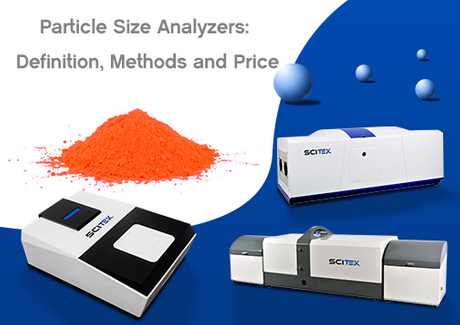
Which Particle Size Analyzer for Pharma, Food, Mining, and Aerosols
Which analyzer best fits a given application depends on material properties, required metrics, and operational constraints. For pharmaceuticals, laser diffraction and dynamic light scattering serve formulation and API characterization, balancing sensitivity with regulatory traceability; sieving remains for coarse granules.
In food, wet and dry laser diffraction plus image analysis handle powders, emulsions, and particulates where ingredient variability and safety matter.
Mining favors robust laser diffraction, sieve analysis, and acoustic or sedimentation methods for wide size ranges and abrasive samples.
Aerosol measurement uses aerodynamic particle sizers, optical counters, and cascade impactors to capture aerodynamic diameter, number concentration, and respirability.
Selection emphasizes measurement range, sample state, throughput, and maintenance demands, enabling operators to choose instruments aligned with performance needs and operational freedom.
Key Features and Software: Automation, Throughput, and Outputs
Because instrument capabilities increasingly hinge on integrated software and workflow design, key features such as automation, throughput, and output formats determine practical utility as much as measurement principles.
The discussion focuses on adaptable control, enabling users to set routines, schedule runs, and chain sample handling with minimal supervision.
Throughput is framed in terms of cycles per hour, sample prep time, and parallel processing options, so operators can align analysis rate with project tempo.
Output versatility covers raw data export, standardized reports, and API access for LIMS or custom dashboards, preserving autonomy over downstream use.
Open formats, scriptable interfaces, and user-rights management support customization without vendor lock-in.
Reliability metrics, error logging, and validation tools complete the feature set for confident, independent operation.
Conclusion
In conclusion, particle size analyzers are essential across industries for controlling quality, optimizing processes, and ensuring regulatory compliance. Selecting an appropriate technology depends on required size range, resolution, sample type, and throughput, while careful sample preparation and dispersion are critical to reliable results. Advanced features—automation, robust software, and meaningful outputs—enhance efficiency and data integrity. Thoughtful instrument choice tailored to application-specific needs maximizes analytical value and operational confidence.


